





Gender pay gap UK statistics 2025

Gender pay gap statistics 2024

The latest (2025) employee earning figures from the Office for National Statistics reveal that many popular job roles in the UK have gender pay gaps.

HR and payroll software provider Ciphr analysed the official data to find out which occupations, industries, and places in the UK have the widest and smallest gender pay gaps.

Key findings:

  • Over three-quarters (78%) of all occupations / job roles in the UK have gender pay gaps in favour of men 
  • Most (85%) occupations that employ 50,000 full-time workers or more in the UK have gender pay gaps in favour of men
  • Two-thirds (65%) of female-dominated occupations – where 60% or more of the jobs (full- and part-time) are filled by women – have gender pay gaps in favour of men
  • Almost all (95%) industries in the UK have gender pay gaps in favour of men

Quick links:

The gender pay gap for full-time employees in the UK is 6.9% in favour of men (Ciphr, 2025)
Women working full-time only earn 93p, on average, for every £1 that men earn (Ciphr, 2025)
76% of all full-time occupations in the UK have a gender pay gap in favour of men (Ciphr, 2025)
full-circles

Popular jobs in the UK and their gender pay gaps

  • iStock-1516343778
  • iStock-1140336019-min
  • iStock-517373438

Based on Ciphr's analysis, most (85%) occupations that employ 50,000 full-time workers or more in the UK have gender pay gaps in favour of men. Only 1.6% of such job roles have no reported pay gaps, and one in seven (13%) pay women more.

Occupations with the largest workforces appear the most likely to have a gender pay gap. According to the latest data, in 2025, 94% of jobs with over 200,000 full-time employees in the UK have a gender pay gap in favour of men. This includes popular roles such as IT manager, registered nurse, admin assistant, LGV driver, secondary school teacher, retail assistant, payroll manager, warehouse operative, chartered accountant, and financial director.

Across all occupations, the average median gender pay gap for full-time workers in the UK in 2025 is 6.9% in favour of men. This means that the gender pay gap has decreased slightly (by 0.2%) for full-time workers over the last year (it was 7.1% in 2024). But women’s hourly pay still lags behind men’s hourly pay in many occupations.


The UK’s mean gender pay gap for full-time employees is 10.9% in favour of men.

Women working full-time in the private sector must also contend with a bigger pay gap than those in the public sector (12.5% vs 8.8%).

For all workers (full- and part-time), the UK’s median gender pay gap in 2025 is 12.8% in favour of men (down 0.3% from 13.1% in 2024). So, women in the UK only earn 87 pence, on average, for every pound men earn.

Popular full-time jobs and their gender pay gaps

Ciphr's research found that:

  • Over 16.5 million people in the UK hold full-time job roles that have a gender pay gap of 1% or higher in favour of men. And about 2.6 million are in occupations that have a gender pay gap of 1% or higher in favour of women
  • The three occupations employing the largest number of full-time workers (over 1.4 million people in the year to September 2025) are care workers and home carers, programmers and software development professionals, and secondary education teaching professionals
  • Women employed as full-time care workers in the UK do have gender pay parity (73% of this job's workforce are women). The gender pay gap for this role is actually tipped in favour of women at -1.6%
  • The average gender pay gap for programmers and software development professionals – an umbrella term that includes over 125 job titles, such as software engineer, machine learning engineer, app developer, games designer, computer programmer, IT analyst and software architect – is 15.7% in favour of men. 81% of people employed full-time in this role are men
  • The gender pay gap for full-time secondary school teachers (53% of which are women) has increased to 3.6% (from 1.9%) in favour of men
  • There are 335,100 full-time administrative / clerical workers in the UK – about 67% of which are women. Other administrative occupations n.e.c. (which includes job titles like administrative assistant, clerical assistant and office administrator) has a gender pay gap of 5.5% in favour of men. So, women doing this job typically only earn an average of 94p for every pound earned by men
  • The fifth largest full-time occupation in the UK is sales accounts and business development managers, with around 318,900 workers (35% of which are women) and a 10% gender pay gap in favour of men

The most common job roles in the UK and their gender pay gaps

Which jobs have the widest gender pay gaps?

Looking at the data by pay disparity rather than employee numbers, there are many occupations – spanning numerous sectors – with far wider gender pay gaps for full-time workers than the UK average of 6.9%.

The full-time occupations in the UK with the widest gender pay gaps are security system installers and repairers (29.6%), aircraft maintenance and related trades (28.7%), waste disposal and environmental services managers (27%), and financial managers and directors (25.7%).

Which jobs have gender pay parity?

There are only three full-time occupation types with no reported gender pay gaps for 2025:

  • Customer service occupations n.e.c. (179,400 people working in roles including customer service administrator, customer care advisor and customer services representative)
  • Kitchen and catering assistants (111,300 people)
  • Sports coaches, instructors and officials (35,500 people)

Some of the occupations with the narrowest gender pay gaps (closest to zero) include bus and coach drivers, postal workers, mail sorters and messengers, cooks, train and tram drivers, quality control and planning engineers, public services associate professionals, ambulance staff (excluding paramedics), senior care workers, gardeners and landscape gardeners, and dispensing opticians.

Did the UK's gender pay gap decrease in 2025?

While the UK's gender pay gap for full-time employees has narrowed slightly (down by 0.2% to 6.9% in 2025), there's still a very long way to go to close it. (Progress is very slow: the gender pay gap was also at 7% in 2020.)

Generally, though, more full-time jobs have decreased their gender pay gaps than increased them. Over half (54%) of occupations that had a gender pay gap in favour of men in 2024 have a lower gender pay gap in 2025 (compared to 44%, which have higher gender pay gaps now). 

Occupations that pay women more than men

Note:

The ONS's 2025 UK gender pay gap data includes 412 jobs in total (however, estimates are unavailable or considered unreliable for 63 of these occupations). The remaining 349 jobs, with reliable / available estimates, employ over 27.5 million people. Of these 349 jobs: 78% (or 272) have a median gender pay gap in favour of men, and 22% (or 77) have a gender pay gap in favour of women. Of those 3.2% (or 11) have a near-zero gender pay gap (less than 0.5%/less than -0.5%).

Looking just at the median gender pay gap data for full-time employees (omitting 83 jobs with missing or unreliable estimates): 76% (or 251) have a gender pay gap (of 0.5% or more) in favour of men, 18% (or 59) have a gender pay gap (of -0.5% or more) in favour of women, 4.9% (or 16) have a near-zero gender pay gap (less than 0.5%/less than -0.5%), and 0.9% (or 3) have no gender pay gap.


(Totals may not sum due to rounding.)

full-circles

Female-dominated jobs with the widest gender pay gaps

  • iStock-1499945824-min
  • iStock-1347521626-min
  • iStock-2147554089-min

Ciphr reviewed the 2025 gender pay gap data to see whether occupations that have more female employees than male employees also have widespread gender pay gaps.

Nearly two-thirds (65%) of all female-dominated occupations (where 60% or more of the jobs are filled / held by women working full- or part-time) have gender pay gaps in favour of men. And just over a third (35%) have gender pay gaps in favour of women.

Most occupations mainly held by women have a gender pay gap

Three-quarters (74%) of full-time job roles held by a greater number of female employees than male employees have a gender pay gap favouring men.

  • The female-dominated occupation with the largest gender pay gap for full-time employees, at 24.1% (up from 21.4% in 2024), is health associate professionals n.e.c. (including health trainer, antenatal teacher, diet adviser, home economist, and therapist). Women doing this job in the UK typically only earn an average of 76p for every pound a man earns
  • Other female-dominated roles with high gender pay gaps include: care escorts, health care practice managers, veterinarians and clinical psychologists. The gender pay gaps for these roles are 19.9%, 19.2%, 14.4% and 13.9% respectively
  • The female-dominated occupation with the sixth-largest gender pay gap (12.7% in favour of men) is mental health nurses. Women doing this job typically only earn an average of 87p for every pound earned by a man
  • Other job roles with high gender pay gaps, despite having large female workforces, include public relations and communications directors, air travel assistants, travel agents, marketing associate professionals, office managers, and pharmacists. All these female-dominated occupations pay men at least 10% or more per hour than women, on average

Female-dominated occupations and their gender pay gaps
All job roles shown have workforces of 36,000 or more full-time employees.
Which male-dominated jobs pay women more than men?

One in six (16%) occupations mainly held by men (where 60% or more of the full-time jobs are filled / held by men) have gender pay gaps in favour of women.

Some of the male-dominated jobs that pay full-time women more than full-time men include financial and accounting technicians (-21.8%), vehicle technicians, mechanics and electricians (-12.2%), parking and civil enforcement occupations (-6.3%), managers in transport and distribution (-4.7%), and police community support officers (-4.4%).

full-circles

Which parts of the UK have the largest gender pay gaps?

  • iStock-1492989161-Portsmouth
    Portsmouth
  • iStock-476393020-Reading
    Reading
  • iStock-1696550245-Edinburgh
    Edinburgh

To find out which places have the largest and smallest gender pay gaps for full-time employees, Ciphr compared ONS data for 153 of the biggest towns and cities in the UK (with populations of 60,000 people or more). The gender pay gap figures quoted here are based on where organisations/employers are located, rather than where their employees live.

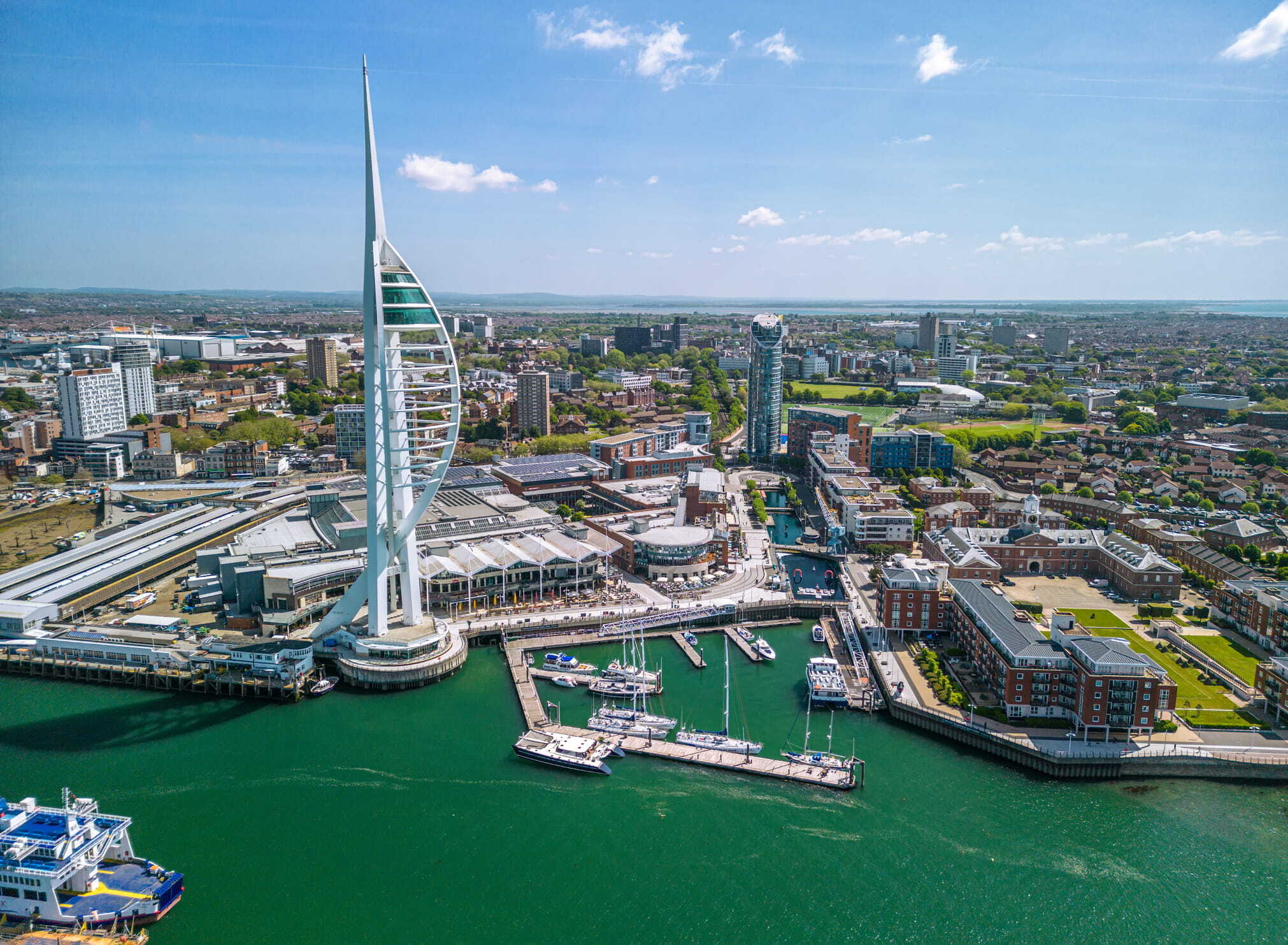
Bracknell, Farnborough (Rushmoor), and Portsmouth topped the list with the widest gender pay gaps in favour of male full-time workers.

Organisations based in these three local authorities have gender pay gaps of 26.5%, 25.2% and 22.1% respectively.

Other towns and cities with gender pay gaps of 19% or more include Stockport (gender pay gap of 19.3%), Tynemouth (North Tyneside, 19.1%), and Telford (and Wrekin, 19%).

Derby, Crawley, Kingswood and Fishponds (South Gloucestershire), and Basildon are also in the top ten, with gender pay gaps ranging from 18.9% to 18%. This means that women employed by firms based in these towns and cities earn around 81-82p for every £1 men earn.

In comparison, Welsh and Scottish towns and cities tend to have lower gender pay gaps for full-time workers, with the widest in Edinburgh (14.8%), Aberdeen (12.3%), Glasgow (10.2%), Paisley (Renfrewshire, 5.2%), Cardiff (4.2%) Dundee (4%), and East Kilbride (South Lanarkshire, 1.2%). (Comparable data for Northern Ireland was not available.)

UK towns and cities with the lowest (under 1%) gender pay gaps in favour of men include Lincoln (0.8%), South Shields (South Tyneside, 0.8%), and Tamworth (0.7%).

Wolverhampton has the lowest (-0.1%) gender pay gap in favour of women, while Eastbourne has the highest at -24.6%.

↓↓↓ The infographics below show the top 12 towns and cities with the biggest gender pay gaps in favour of men, and the six towns and cities with the biggest gender pay gaps in favour of women in 2025. ↓↓↓


[Note: Where data was unavailable or unreported for any towns or cities included in this study, then local authority gender pay gap data was used instead.]

Towns and cities with the widest gender pay gaps in favour of men

Towns and cities with the widest gender pay gaps in favour of women

Which local authorities have the largest gender pay gaps?

Ribble Valley in Lancashire has the widest gender pay gap in the UK in 2025 at 32.3%. This means that full-time female employees working at organisations based there earn 68p, on average, for every pound that men earn.

Folkestone and Hythe, Mole Valley, and Malvern Hills also have gender pay gaps of 28% or over in favour of men.

The local authorities with the largest gender pay gaps in favour of women in 2025 include Adur (gender pay gap of -36%), Ceredigion (-25.4%), Scottish Borders (-25%), and Eastbourne (-24.6%). This means that full-time male employees working at organisations based in these areas earn between 64p and 75p, on average, for every pound that women earn.

Where are the biggest gender pay gaps in the UK?

England leads the four nations when it comes to the widest gender pay gaps in favour of men. Without exception, all English regions have higher gender pay gaps than Wales, Scotland and Northern Ireland. The gender pay gap for full-time workers has decreased, however, in five of nine regions in England (and stayed at the same level in one region).

The South East, London, and West Midlands top the list of places with the widest gender pay gaps in 2025. Organisations based in these areas have gender pay gaps (favouring men) of 11%, 10.7%, and 10.1% respectively.

Northern Ireland has the lowest gender pay gap for full-time workers at 1.1%, with Wales at 1.9%, Scotland at 3.5%, and England at 7.7%.

full-circles

Which industries in the UK have the largest gender pay gaps for full-time workers?

  • iStock-1522425869-1
  • 1434731201-min
  • IT worker

According to the latest employee earnings data from the Office for National Statistics, the median gross annual salary for people in full-time employment in the UK increased by 4.3% to £39,039 in April 2025 (this amount includes basic pay plus incentive pay, shift-premium pay, overtime pay and other pay).

The average gross weekly pay for full-time employees was £766.60 (basic pay plus incentive pay, shift-premium pay, overtime pay and other pay) and the average hourly rate (basic pay, excluding overtime) is £19.67.

The median (basic) pay for full-time male employees is currently £20.27 an hour (excluding overtime). Full-time female employees are paid £1.40 less, on average – at £18.87 an hour. This works out to a 6.9% gender pay gap, which means that, on an hourly basis, women earn 93p for every pound men earn.


To see how your hourly rate compares with the UK average, try Ciphr’s hourly wage calculator.


Ciphr’s analysis of the 2025 gender pay gap data shows that, on average (where estimates are available), men’s full-time hourly pay is higher than women’s full-time hourly pay in almost every (95%) UK industry. Pay gaps vary from 1.7% for transportation and storage up to 26.7% for those employed in mining and quarrying.

Only one industry in the UK (the water supply, sewerage, waste management and remediation activities sector) pays its full-time female employees more, on average, per hour than its full-time male employees. 

Industries with the biggest gender pay gaps in favour of men

  • The highest paying industry for full-time workers (in April 2025) was financial and insurance activities, with an average annual salary of £58,488. It has a significant gender pay gap of 22.3% in favour of men
  • Workers employed in electricity, gas, steam and air conditioning supply were paid £55,469 in 2025. The gender pay gap in favour of men is 10.5%
  • The third highest paid sector is information and communication, with an average salary of £52,264 in 2025. The gender pay gap is 9%
  • Full-time employees working in mining and quarrying are the next highest paid at £50,943. This industry has the widest gender pay gap at 26.7%
  • The fifth highest paying sector is professional, scientific and technical activities (£46,208), which has a gender pay gap of 16.4% in favour of men
  • The lowest earners in 2025, on average, were those working in the accommodation and food service industry (the gender pay gap is 3.4% less for women than for men). Their average salary of £28,687 is around three-quarters (73%) of the UK average of £39,039

UK industries and their gender pay gaps for full-time workers

full-circles

Gender pay gap survey 2024

Ciphr commissioned a survey of 2,000 UK adults, including 1,188 employees, to find out how closely people’s perceptions of the gender pay gap (if any) matched the reality of the 2024 gender pay gap figures from the ONS.

The findings revealed that most people underestimate how many jobs in the UK have gender pay gaps. 

Here’s some of the jobs that people thought were most likely to have gender pay gaps: 
•    Chief executives (CEOs) and senior officials: 35% of respondents
•    Private sector jobs: 26%
•    Financial managers and directors: 31%
•    HR managers and directors: 23%
•    Programmers and software development professionals: 21%

The gap between perception and reality: Over one in five (22%) UK adults said that no job roles had gender pay gaps in favour of men in 2024. And, just one in 12 (or 8%) surveyed employees said that their own job had a gender pay gap. 

For more results and further analysis of this research, check out the table below and read Ciphr’s press release: Most people underestimate the scale of the UK’s gender pay gap


full-circles

Notes 

Unless otherwise indicted, all median gender pay gap data, earnings estimates, and workforce numbers are for full-time employees. 

Earnings data relates to the tax year ending 5 April 2025. Earnings estimates shown are median hourly earnings (excluding overtime) and median gross earnings (weekly and annual) for full-time workers (which includes basic pay plus incentive pay, shift-premium pay, overtime pay and other pay).

Occupational roles are listed as per the ONS’s one- and four-digit Standard Occupational Classification (SOC2020) codes. Broad occupational categories, with two- or three-digit SOC codes, were not included. 

All data and wage gap statistics sourced from the Office for National Statistics (ONS):

  • Gender pay gap in the UK: 2025 (revised dataset released on 27 November 2025):  https://bit.ly/3OtQerI 
  • Employee earnings in the UK: 2025 (Measures of employee earnings, using data from the Annual Survey for Hours and Earnings – ASHE: provisional dataset released on 23 October 2025):  https://bit.ly/3MjPZir 
  • NOMIS – Occupation (SOC2020) by sex, employment status and full/part-time (online dataset: October 2024-September 2025): https://bit.ly/40pJZHy
  • SOC 2020 Volume 2: the coding index and coding rules and conventions (Version 13: December 2025): https://bit.ly/47wT2Zo
  • Gender pay gap (previous datasets from 2020-2024):  https://bit.ly/3YHAOBS 


Ciphr compared census population estimates for major and large towns and cities to create a list of the 150 largest (most-populous) towns and cities in the UK. For more details see: 


Fair use statement: If you are interested in sharing these statistics, or quoting this study in an article, please include a link to this infographic page and credit Ciphr. Thanks.

Author: Emma-Louise Jones

This infographic was published in February 2026, using new (2025) data. It replaced an earlier version published in November 2024. 

Popular infographics